
Why use tantalum capacitors in circuit board assembly
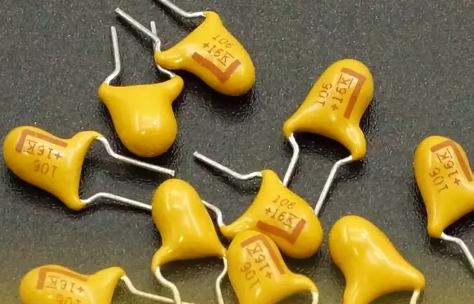
  A capacitor is a component made up of two metal films placed close together and separated by an insulating material. The two pieces of metal are called pole plates, and the material in between is called the dielectric. The key reason why capacitors can be divided into different types is that there are certain differences. There are many differences not only in materials, but even in design principles, working principles and structures.  Tantalum is the second most precious metal after precious metals, and is one of the most expensive of the rare metals. Tantalum capacitors are electronic components with tantalum as the main component, small in size and high in capacity, installed on printed circuit boards of many small electrical/electronic devices such as personal computers, cell phones and digital.  What is tantalum capacitor  Electrolytic capacitors with tantalum as a component are called tantalum capacitors. They are polarized capacitors with good frequency and stability. It has a tantalum anode and electrolytic capacitor.  Tantalum capacitors have been used in electronic circuits since the 1950’s. Today they still play an important role in many different types of electronics.  Tantalum capacitors are a kind of electronic components which is widely used in the industries. They can be found in every electronic product such as speakers and cell phones, TV and microwave oven, computer and headphone.  What is a tantalum capacitor used for  Tantalum capacitors are small, high-capacity capacitors. Tantalum capacitors come in various shapes and are made into small and chip components suitable for surface mounting. Tantalum capacitors are used not only in military communications, but also in aviation, aerospace and other fields, and are widely used in industrial control and vision, in frequency equipment, communication instruments and other products.  Due to the thin oxide film, the distance between the two pole plates of tantalum capacitors is very close, and there is almost no inductive reactance, which is very sensitive, so the charging and discharging speed is very fast. In addition, because there is no electrolyte inside the tantalum capacitor, it is very suitable for working under high temperature.  Tantalum capacitors are used in many different applications, including:  ●Power supplies and inverters  ●Radio frequency systems  ●Telecommunications equipment  ●Scientific instrumentation equipment (e.g., oscilloscopes)  What are the pros and cons of tantalum capacitors  Tantalum capacitors are a good choice for electronic applications. They are used in power supplies and other low-power devices, as they provide high capacitance while maintaining low leakage currents. They also have excellent ESR (equivalent series resistance), which means that they can withstand high voltages without affecting their performance.  Pros  Tantalum capacitors have several advantages over traditional aluminum electrolytic capacitors:  ●Tantalum has better conductivity than aluminum, making it ideal for applications where heat dissipation is important (such as switching power supplies).  ●It has lower drift rate than aluminum due to its higher dielectric constants (dielectric constant is the property of an insulating material that determines how easily electricity flows through it).  ●You can use tantalum capacitors with no risk of arcing or explosions because there’s no need for venting holes on them—and if you do want one then you’ll be able to find one at any electronics store!  Cons  There are some disadvantages of tantalum capacitors:  ●Tantalum capacitors are more expensive than ceramic capacitors, and they can be up to twice as expensive as aluminum electrolytic capacitors.  ●It takes time for the capacitor to break in and get its full potential.  What are the features of tantalum capacitor  The Reliability:  Tantalum capacitors are reliable, and they have a longer service life than other types of capacitors. They have high current handling capability with low losses in comparison to other ceramic types such as alumina/silicon carbide (ACSR).  The low power consumption  The low power consumption is another advantage of tantalum capacitors. Since they have a low voltage drop, they require less energy to run at full capacity. This means that you will use less electricity per day than you would with other types of capacitors. Another benefit is that your system will generate less heat during operation so there’s no need for fans or cooling systems.  The high energy density  The high energy density of tantalum capacitors is a great substitute for the traditional ceramic capacitors. This is because it has a high electrical conductivity, which makes it an excellent choice for use in applications that require high power densities or large currents.  In addition to its excellent electrical properties, tantalum capacitors also have the ability to be stacked together to form larger assemblies for even greater power handling capacity. These stacking designs can be used as independent units or as building blocks toward larger projects.  Resistance to high temperatures and voltages  Tantalum capacitors have low temperature coefficients and can withstand high voltage applications without any problems, unlike the aluminum electrolytic type which has a low coefficient of thermal expansion at elevated temperatures.What is polarity on tantalum capacitor  Tantalum capacitor has one-way conductivity, which is called “polarity”, when using, the current should be accessed according to the positive and negative direction of the power supply, the anode (positive) of the capacitor is connected to the “+” pole of the power supply, and the cathode (negative) is connected to the “-” pole of the power supply, if the capacitor is connected wrongly, not only the capacitor can not play a role, but also the leakage current is very large, and the core will be hot in a short time, and the oxide film will be destroyed and then fail.  In general, positive polarity means positive terminal of the battery is connected to positive terminal of the capacitor while negative polarity means that it is connected to negative terminal of the capacitor.
Release time:2024-07-05 14:09 reading:862 Continue reading>>
How to recognize and prevent damage to circuit boards from overheating?
  Recognizing and preventing overheating damage to circuit boards is crucial for ensuring the reliability and longevity of electronic devices. Here are some guidelines to help you identify signs of overheating and prevent damage:  Recognizing PCB Overheating  Unusual Smells:  Sign: Burning or unusual odors.  Cause: Overheating components can release distinct smells due to solder or other materials reaching high temperatures.  Discoloration:  Sign: Darkened or discolored areas on the circuit board.  Cause: Excessive heat can lead to discoloration of the PCB or nearby components.  Visual Inspection:  Sign: Distorted or melted components.  Cause: Overheating can cause physical damage, such as distortion or melting of plastic or metal components.  Malfunctioning Components:  Sign: Erratic behavior, intermittent failures, or complete failures.  Cause: Overheating can damage or degrade electronic components, leading to malfunctions.  Preventing PCB Overheating  Proper Ventilation:  Action: Ensure that electronic devices have proper ventilation to dissipate heat.  Considerations: Adequate airflow and proper placement of components can prevent the buildup of heat.  Heat Sinks and Fans:  Action: Use heat sinks and fans to dissipate heat from critical components.  Considerations: Heat sinks absorb and transfer heat away from components, while fans increase airflow.  Thermal Design:  Action: Implement a proper thermal design for the circuit board.  Considerations: Distribute heat-generating components evenly, and use materials with good thermal conductivity.  Temperature Monitoring:  Action: Implement temperature monitoring systems.  Considerations: Use temperature sensors to monitor critical areas and trigger alarms or shutdown procedures if temperatures exceed safe limits.  Proper Component Selection:  Action: Choose components with appropriate power ratings and thermal characteristics.  Considerations: Select components that can handle the expected heat dissipation without exceeding their specified limits.  Controlled Ambient Conditions:  Action: Ensure that electronic devices are used within specified environmental conditions.  Considerations: High ambient temperatures can contribute to overheating; maintain the operating environment within recommended limits.  Regular Maintenance:  Action: Perform regular inspections and maintenance.  Considerations: Dust accumulation can impede airflow and contribute to overheating; clean devices periodically.  Optimized Power Supply:  Action: Use an optimized and stable power supply.  Considerations: Fluctuations or improper power supply can lead to increased heat generation; ensure stable and appropriate voltage levels.  By implementing these measures, you can both identify signs of overheating and take proactive steps to prevent damage to circuit boards in electronic devices.  What are the hazards of circuit board overheating ?  Circuit board overheating can lead to various hazards and adverse effects, potentially causing damage to electronic components, reducing the lifespan of devices, and posing safety risks. Here are some hazards associated with circuit board overheating:  • Component Damage:  Risk: Overheating can cause semiconductor devices, resistors, capacitors, and other electronic components to degrade or fail.  Consequence: Malfunctioning or damaged components can lead to device failures, data loss, or system instability.  • Reduced Lifespan:  Risk: Prolonged exposure to high temperatures can significantly reduce the lifespan of electronic components.  Consequence: Devices may experience premature failures, requiring more frequent replacements or repairs.  • Thermal Stress:  Risk: Rapid temperature changes or uneven heating can result in thermal stress on the circuit board and its components.  Consequence: Thermal stress may cause solder joints to crack or weaken, leading to intermittent connections or complete failures.  • Fire Hazard:  Risk: Overheating, especially in extreme cases, can pose a fire hazard.  Consequence: Ignition of flammable materials, such as PCB substrates, insulation, or nearby components, may lead to fire incidents.  • Data Loss:  Risk: Overheating can affect storage devices, including hard drives and solid-state drives.  Consequence: Critical data stored on the affected devices may become corrupted or permanently lost.  • Electromagnetic Interference (EMI):  Risk: Overheating can lead to increased electromagnetic interference.  Consequence: EMI may negatively impact the performance of nearby electronic devices or systems, leading to communication errors or malfunctions.  • Safety Risks:  Risk: Overheating can compromise the safety of electronic devices.  Consequence: Devices used in safety-critical applications, such as medical equipment or automotive systems, may experience failures that pose risks to users.  • Warranty Voidance:  Risk: Manufacturers often specify operating temperature ranges for electronic devices.  Consequence: Overheating may void warranties, leaving users responsible for repair or replacement costs.  • Environmental Impact:  Risk: Overheated devices may not comply with environmental regulations.  Consequence: The disposal of damaged or non-compliant electronic devices can contribute to environmental pollution.
Key word:
Release time:2024-04-28 10:00 reading:841 Continue reading>>
What are diodes in the circuit board?
  PCB diode is one of the most established and most significant electronic gadgets, in spite of the fact that it isn’t quite as well known as its cousin, the semiconductor. Utilized in a wide range of electrical and electronic frameworks, the diode capabilities as a one-way valve for electric flow — it just permits flow to stream in one bearing. This is valuable in changing AC over completely to DC, handling high recurrence signals, controlling voltages, and in different applications.  There are two fundamental sorts of PCB diode. One is an electron tube like the triode. The other kind purposes semiconductors, similar to the semiconductor. Both were concocted from the get-go in the twentieth hundred years.  In this article, you can know everything about PCB diode and related information about this topic.  What are diodes in the circuit board?  A PCB diode is a semiconductor gadget that basically goes about as a one-way switch for current. It permits current to stream effectively in one course, however seriously limits current from streaming the other way.  PCB diode is otherwise called rectifier since it changes substituting current (ac) into throbbing direct current (dc). PCB diode is appraised by their sort, voltage, and current limit.  PCB diode is not set in stone by an anode (positive lead) and cathode (adverse lead). PCB diode permits current to stream just when positive voltage is applied to the anode. An assortment of diode setups are shown in this realistic.  PCB diode is accessible in different setups. From left: metal case, stud mount, plastic case with band, plastic case with chamfer, glass case. A PCB diode is the ‘one way’ sign for electrical circuits. The current is permitted to just travel through the PCB diode in one course. Every diode has a positive end, the anode, and an adverse end, the cathode. Current streams from the anode to the cathode, however not the reverse way around.  Why we should use PCB diodes?  A PCB diode is a gadget that permits current to stream in one heading however not the other. This is accomplished through an underlying electric field. Albeit the earliest diodes comprised of scorching wires going through the center of a metal chamber which itself was situated within a glass vacuum tube, present day diodes are semiconductor diodes. As the name recommends, these are produced using semiconductor materials, principally doped silicon.  The most normal application is by a wide margin the utilization of PCB diode for the correction of AC capacity to DC power. Utilizing diodes, various kinds of rectifier circuits can be made, the most fundamental of which are half wave, full wave community tapped, and full scaffold rectifiers. These are critical in hardware power supplies – for instance, a PC’s charger – where an air conditioner current, which comes from the mains power supply, should be changed over completely to a DC current which can then be put away.  Delicate electronic gadgets should be safeguarded from floods in voltage, and the diode is ideal for this. When utilized as voltage insurance gadgets, PCB diode is nonconducting, notwithstanding, they promptly short any high-voltage spike by sending it to the ground where it can’t hurt delicate coordinated circuits. For this utilization, particular diodes known as “transient voltage silencers” are planned. These can deal with huge power spikes throughout brief time frame periods which would ordinarily harm touchy parts.  Characteristics of diode  Fundamental static attributes of PCB diode are the forward voltage VF and forward current IF, and the opposite voltage and current VR and IR.  The region encompassed by the orange ran line in the chart on the right shows the usable area of amending diodes. In particular, this is the region inside the scope of admissible IF, and inside the breakdown voltage range in the opposite bearing. It ought to be noticed that the region encased by the green ran line is the usable area of Zener diodes, albeit these are not examined in this part. This region isn’t usable for different diodes, and assuming this region is placed unbounded on the IR, gadget disappointment might happen.  Reverse Recovery Time is when, from the state wherein a voltage is applied in the forward heading and forward current In the event that is streaming, the voltage is shifted to the opposite course and the converse current IR gets back to the consistent state (basically zero).  As shown in the graph on the right, when the gadget changes from the ON-state in which an In the event that is streaming to the OFF-state, in a perfect world IF would quickly go to nothing. Yet, in reality, zero is passed, and a converse current IR streams quickly, which recuperates to focus in time Reverse Recovery Time. The more limited Reverse Recovery Time is, the better is the gadget trademark.  The capacitance Ct is the capacitance of the actual diode, and has a similar impact as a capacitor. As in the chart on the right, when a PCB diode is turned here and there, assuming Ct is huge, the supposed adjusting of the waveform turns out to be more articulated, and sometimes there might be the issue that the gadget starts switch off activity before an applied voltage arrives at a full level because of time constants. In a rapid exchanging circuit, diodes with a low Ct are attractive.
Key word:
Release time:2023-12-21 16:23 reading:1655 Continue reading>>
What is the difference between thick film and thin film circuit board?
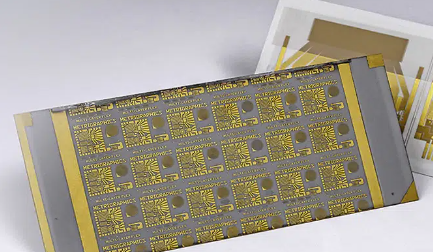
  Thin film circuit boards are specialized substrates used in electronic applications where precision, miniaturization, and high performance are crucial. They’re constructed by depositing thin layers of conductive, resistive, or insulating materials onto a substrate, typically made of ceramic or glass.  What is a thick film circuit board?A thick film circuit board refers to a type of printed circuit board (PCB) that utilizes thick film technology in its manufacturing process. In contrast to traditional thin film PCBs, which use thin layers of conductive material deposited on the board, thick film circuit boards involve the deposition of thicker layers of conductive and resistive materials on the board’s surface.  The manufacturing process involves screen printing a paste-like mixture of conductive materials, such as silver, gold, or palladium, along with glass or ceramic materials, onto the substrate. This thick film paste is then fired at high temperatures to fuse the materials onto the board, forming the conductive traces, resistors, and other circuit elements.Thick film circuit boards offer several advantages:  Cost-Effectiveness: The manufacturing process is generally less expensive compared to traditional thin film technologies.  Ease of Prototyping: Thick film technology allows for rapid prototyping and quick modifications to circuit designs.  Adaptability: They are suitable for hybrid circuits, combining both passive and active components on the same substrate.  Robustness: Thick film boards tend to be more durable and resistant to environmental factors like moisture and temperature variations.  These boards find applications in various industries, including automotive electronics, industrial controls, sensors, and certain medical devices where cost-effective and robust circuitry is required.  What is a thin film circuit board used for?Thin film circuit boards are primarily used in applications where high precision, high-frequency, and high-performance electronic circuits are necessary. These boards are manufactured by depositing thin layers of conductive materials, typically metals like gold, platinum, or alloys, onto a substrate using specialized deposition techniques such as sputtering or chemical vapor deposition.  Some common applications of thin film circuit boards include:  High-Frequency Electronics: Thin film boards excel in high-frequency applications such as microwave devices, satellite communication systems, and radar systems due to their low signal loss and high-frequency capabilities.  Aerospace and Defense: These boards are extensively used in aerospace and defense applications where reliability, miniaturization, and high performance are critical, including in avionics, navigation systems, and military-grade electronics.  Telecommunications: Thin film technology is employed in telecommunications equipment where high-speed data transmission and signal integrity are essential, such as in network infrastructure and data centers.  Medical Devices: Certain medical devices, especially those requiring precise sensors or high-frequency components, use thin film circuitry for their compactness and reliability, such as in medical imaging devices or diagnostic equipment.  Optoelectronics: Thin film boards are used in optoelectronic devices like LEDs, photodetectors, and fiber optics due to their compatibility with optical materials and precise fabrication requirements.  Consumer Electronics: In some specialized consumer electronics requiring high performance, like certain types of audio equipment or high-speed data processing devices, thin film technology might be employed.  These applications benefit from the thin film’s precise deposition, allowing for highly accurate and controlled circuit elements, low noise, excellent signal integrity, and the ability to operate at high frequencies.  What is the difference between thick film and thin film circuit board?The difference between thick film and thin film circuit boards primarily lies in their manufacturing processes, material thickness, and applications:  Manufacturing Process:  Thick Film: Thick film circuit boards are manufactured by depositing relatively thicker layers of conductive materials (usually pastes containing metal oxides) onto a substrate through screen printing or stencil printing processes. These layers are then fired or cured to create the circuitry.  Thin Film: Thin film circuit boards are made by depositing very thin layers of conductive materials (typically metals like gold, platinum, or alloys) onto a substrate using advanced deposition techniques such as sputtering or chemical vapor deposition.  Material Thickness:  Thick Film: The conductive and insulating layers in thick film circuits are relatively thicker, often in the range of several micrometers to tens of micrometers.  Thin Film: In contrast, thin film circuits have extremely thin conductive layers, typically in the range of a few nanometers to a few micrometers.  Applications:  Thick Film: Thick film circuits are commonly used in applications where cost-effectiveness, robustness, and moderate precision are required. They find use in automotive electronics, household appliances, sensors, and some medical devices.  Thin Film: Thin film circuits excel in applications that demand high precision, high frequency, low noise, and superior performance. They are used in high-frequency communication systems, aerospace technology, defense applications, and high-end electronic devices where miniaturization and precision are critical.  Performance:  Thick Film: These circuits typically have higher resistance and lower precision compared to thin film circuits.  Thin Film: Thin film circuits offer higher precision, low signal loss, excellent high-frequency performance, and are capable of handling high-speed data transmission due to their minimal thickness and precise fabrication.  In summary, thick film and thin film circuit boards differ in their manufacturing techniques, material thickness, and the applications they are best suited for.
Key word:
Release time:2023-12-04 17:55 reading:1641 Continue reading>>

Turn to

/ 1

  • Week of hot material
  • Material in short supply seckilling
model brand Quote
RB751G-40T2R ROHM Semiconductor
BD71847AMWV-E2 ROHM Semiconductor
MC33074DR2G onsemi
CDZVT2R20B ROHM Semiconductor
TL431ACLPR Texas Instruments
model brand To snap up
BU33JA2MNVX-CTL ROHM Semiconductor
IPZ40N04S5L4R8ATMA1 Infineon Technologies
STM32F429IGT6 STMicroelectronics
BP3621 ROHM Semiconductor
ESR03EZPJ151 ROHM Semiconductor
TPS63050YFFR Texas Instruments
Hot labels
ROHM
IC
Averlogic
Intel
Samsung
IoT
AI
Sensor
Chip

About us

Qr code of ameya360 official account

Identify TWO-DIMENSIONAL code, you can pay attention to

AMEYA360 mall (www.ameya360.com) was launched in 2011. Now there are more than 3,500 high-quality suppliers, including 6 million product model data, and more than 1 million component stocks for purchase. Products cover MCU+ memory + power chip +IGBT+MOS tube + op amp + RF Bluetooth + sensor + resistor capacitance inductor + connector and other fields. main business of platform covers spot sales of electronic components, BOM distribution and product supporting materials, providing one-stop purchasing and sales services for our customers.

Please enter the verification code in the image below:

verification code